Overview
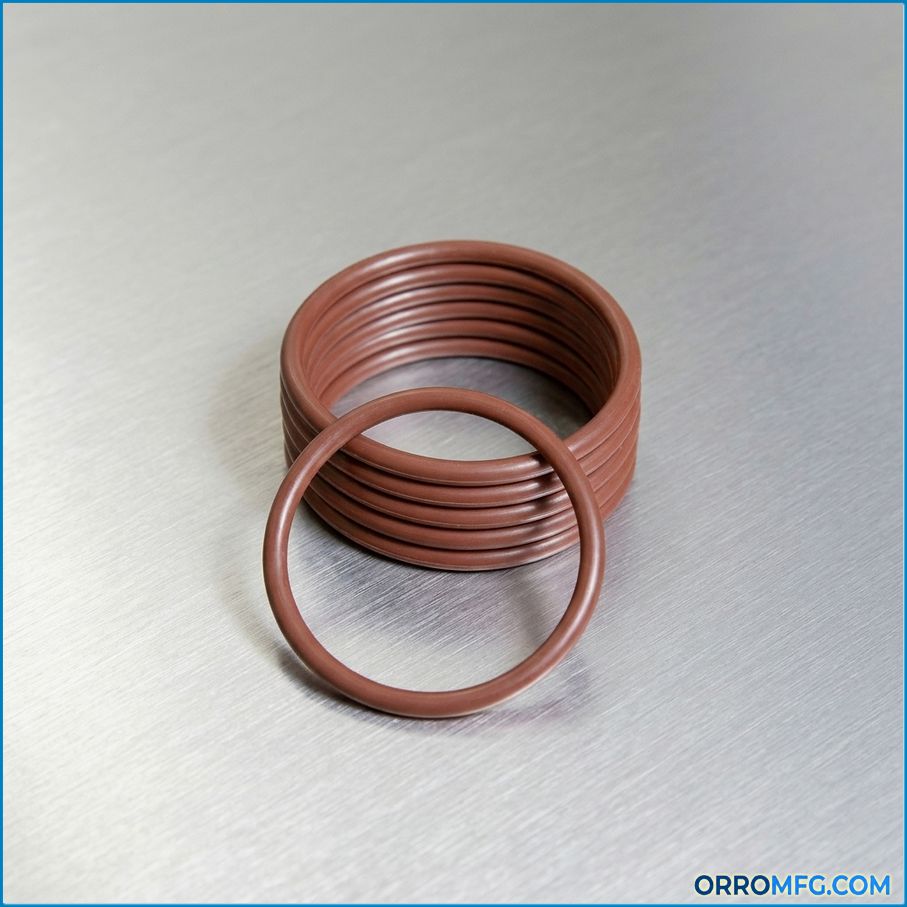
FKM O-rings are the standard seal for hot oil, fuel and chemical service. Made from fluorocarbon rubber — Viton is the best-known trade name — they hold their shape and sealing force from −20°C to about +200°C, where a nitrile ring would harden, lose compression set and start to leak. The fluorine content in the compound is what resists swelling in mineral oils, synthetic hydraulic fluids, petrol, diesel and aromatic solvents, and what keeps the ring working after thousands of heat cycles.
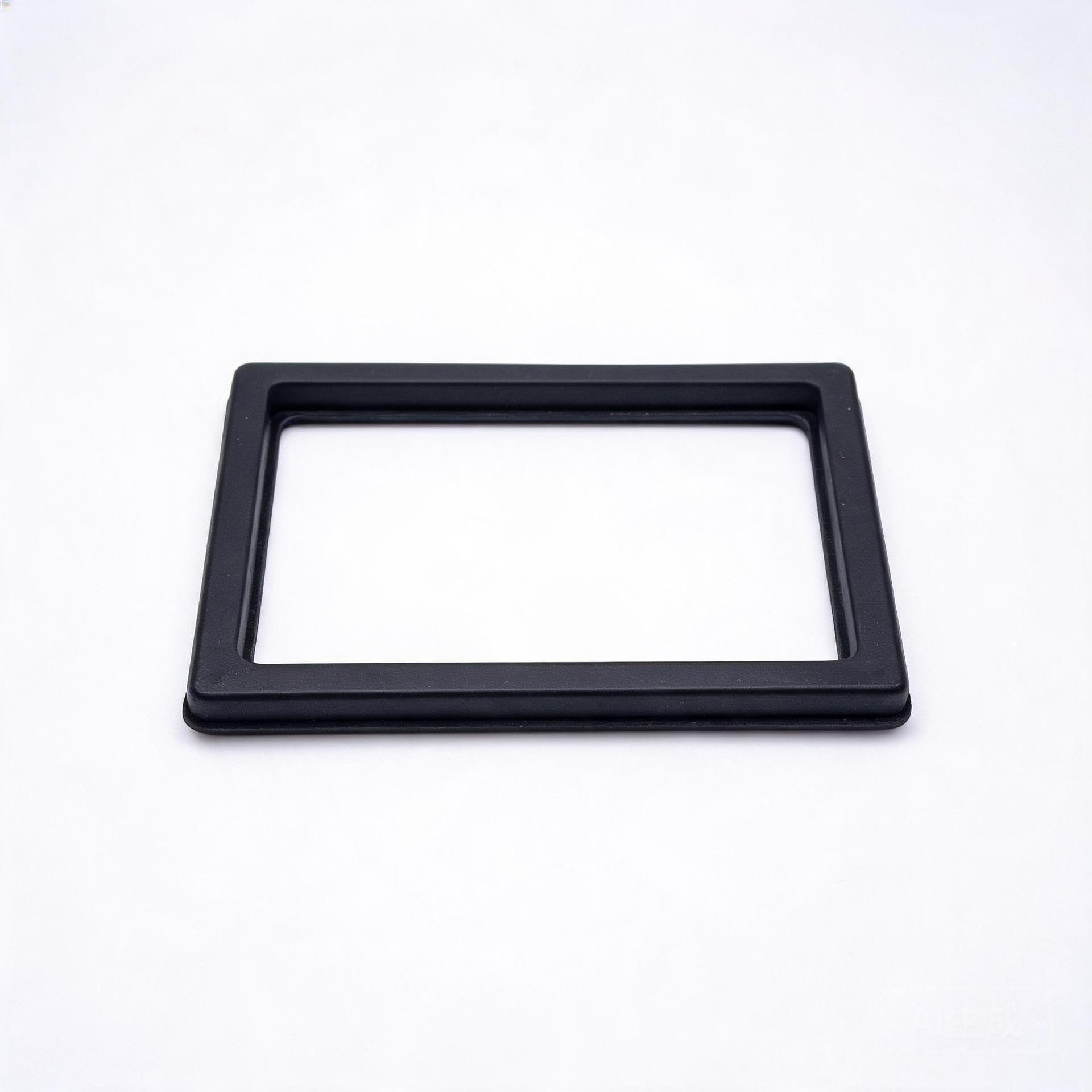
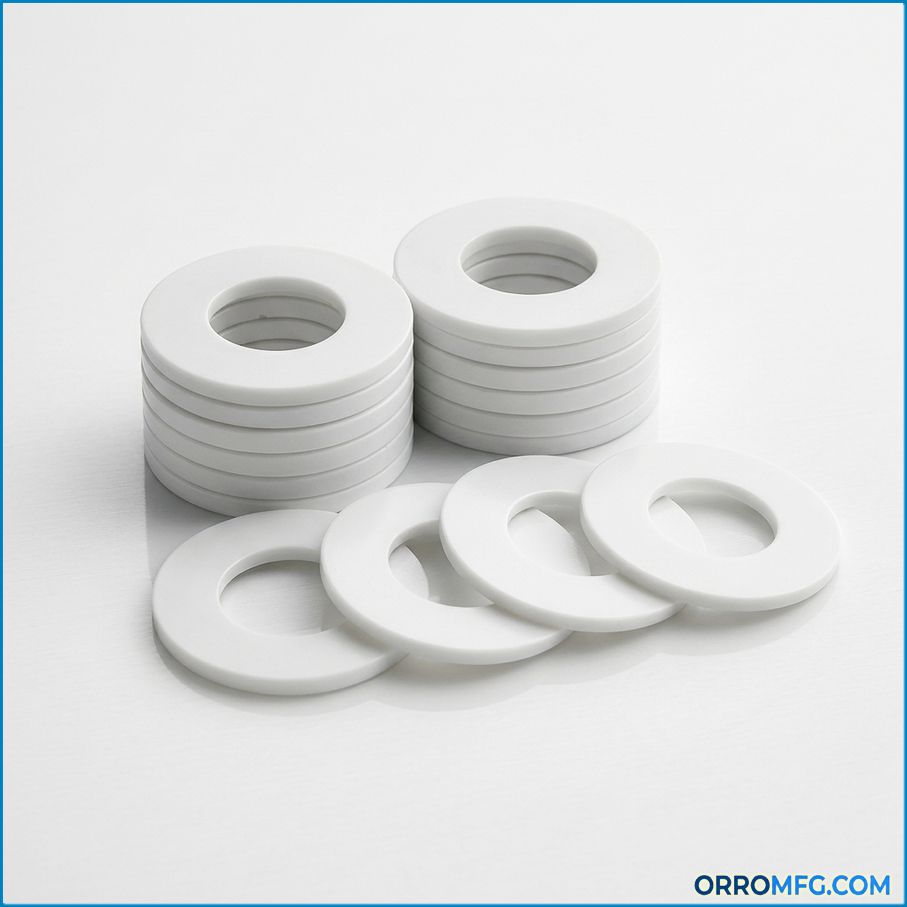
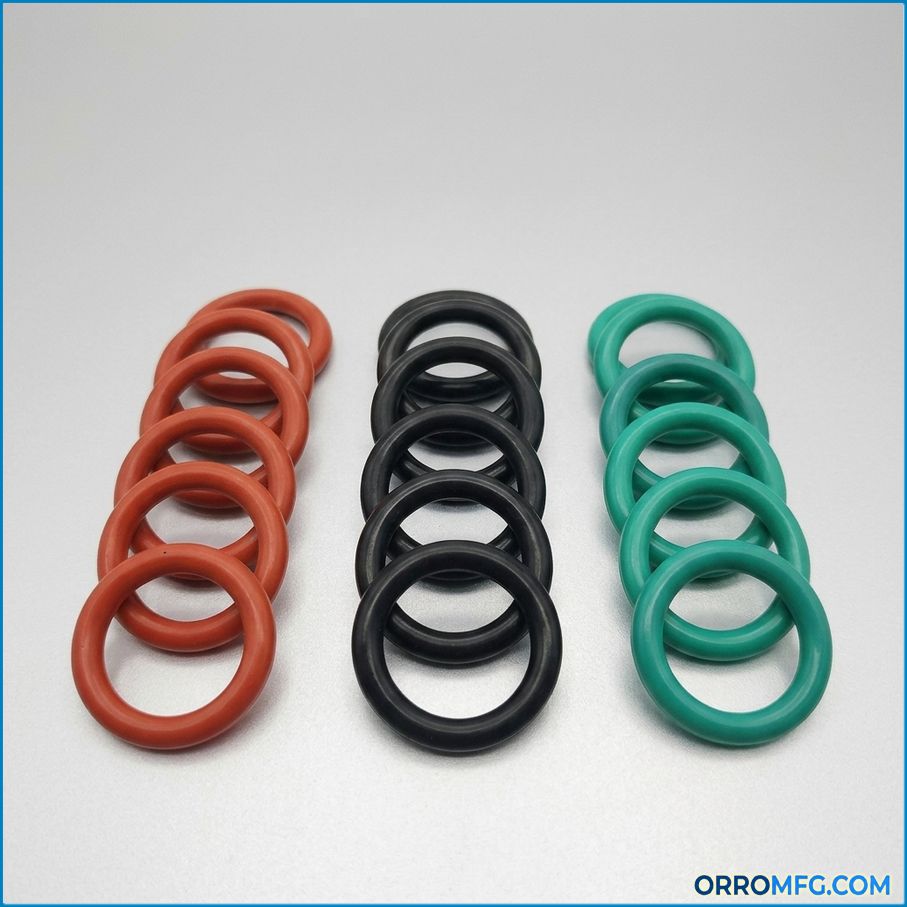
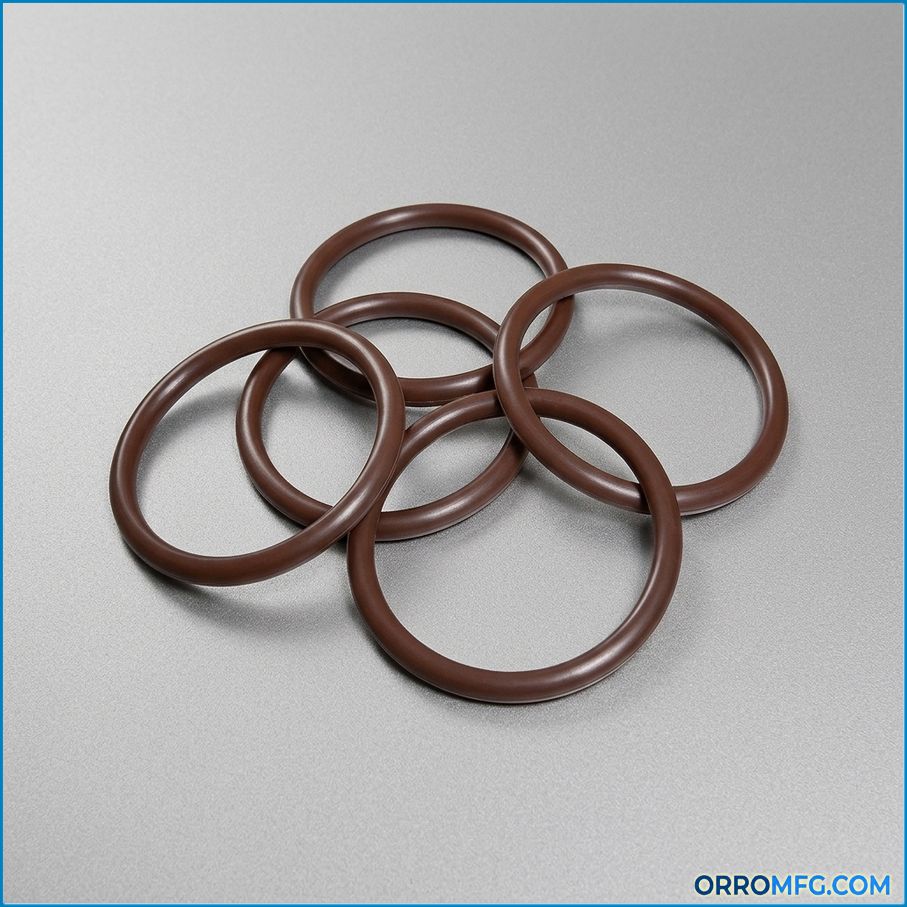
We supply black, brown and green FKM O-rings in 70, 75, 80 and 90 Shore A, in AS568, ISO 3601, JIS B2401 and DIN 3771 sizes as well as metric sizes cut to your drawing. Standard sizes ship from stock; non-standard and custom compounds are moulded to order. The same material is available as sheet, cord and moulded gaskets for flange and housing seals.
Why FKM Instead of NBR
- Temperature — continuous service to +200°C, with short peaks to 220-230°C. Nitrile is limited to about 100°C for long life.
- Compression set — FKM keeps 15-25% set after 70 hours at 200°C, so the ring still pushes against the groove after years in a hot housing. NBR takes a permanent set and leaks.
- Oil and fuel — very low swell in mineral oil, synthetic oil, petrol, diesel and biodiesel blends; low permeability to fuel vapour.
- Chemicals — resists mineral acids, hydrocarbons and many solvents; special compounds extend this to bases and steam.
- Ozone and weather — no surface cracking outdoors, which matters for exposed hydraulic and engine components.
- Wide hardness range — 70 Shore A for low-pressure static seals up to 90 Shore A for extrusion resistance in high-pressure grooves.
Temperature and Compound Grades
Standard FKM covers −20°C to +200°C. Cold start-up is the usual limitation, so the compound matters as much as the material name:
- Standard FKM (bisphenol-cured) — the general grade for engine oil, fuel and hydraulic service; lowest cost, best compression set at temperature.
- Low-temperature FKM (GLT / GFLT) — keeps flexibility down to about −40°C in static seals, at some cost in oil and steam resistance.
- Steam-resistant FKM (GLT-S) — for hot water and low-pressure steam where standard FKM would blister.
- Base-resistant FKM — for alkaline cleaners and amine-containing media that attack standard compounds.
- FFKM — a perfluoroelastomer, not FKM, for continuous temperatures above 230°C or aggressive plasma and solvent service.
Tell us the maximum continuous temperature, the lowest start-up temperature and the media; we will match the compound rather than quote a generic FKM.
Sizes, Standards and Hardness
| Parameter | Range |
|---|---|
| Inside diameter | Standard AS568 and metric sizes; custom diameters on request |
| Cross-section | 1.78 mm, 2.62 mm, 3.53 mm, 5.33 mm and metric equivalents |
| Hardness | 70, 75, 80, 90 Shore A |
| Tolerance | ISO 3601 dimensional tolerances, Class A on request |
| Colour | Black, brown, green; other colours on request |
| Standards | AS568 (US), ISO 3601 (international), JIS B2401 (Japan), DIN 3771 (Germany), BS 1516 (UK) |
The most common mistake in ordering is specifying only the inside diameter. An O-ring is defined by ID × cross-section, and the groove depth and width must match both. Send the groove drawing or the old ring with its dimensions, and we will confirm the size before production.
Applications
Automotive Engine and Fuel Systems
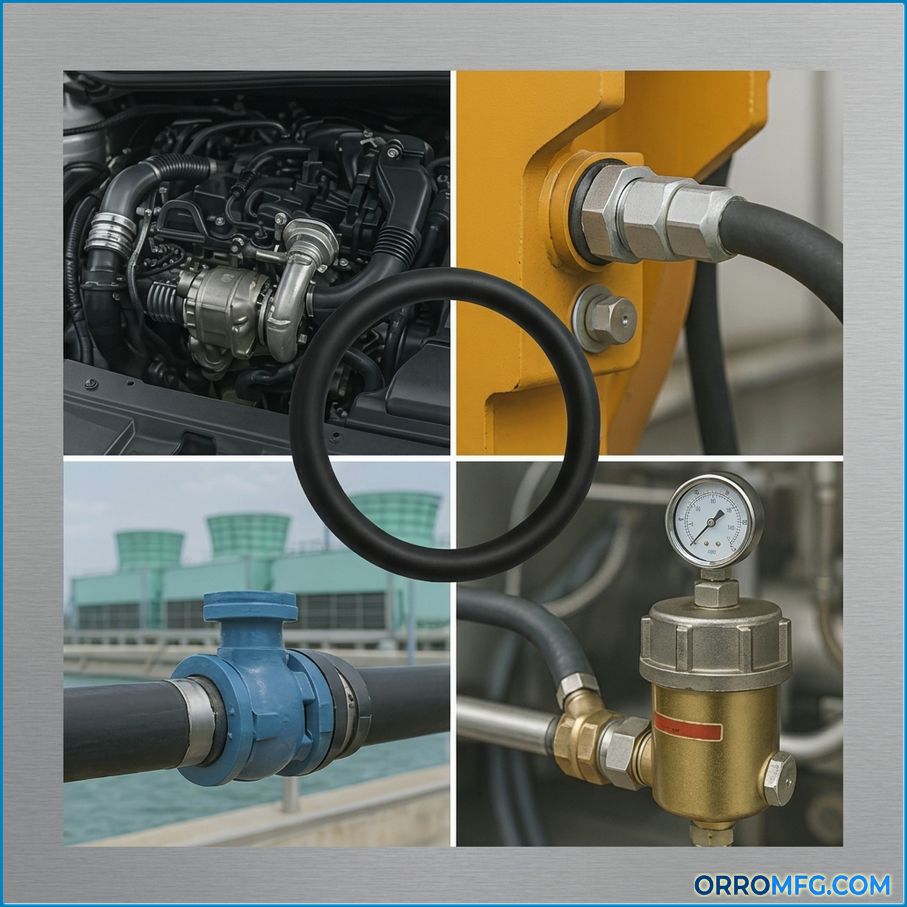
FKM is the material behind injector O-rings, fuel pump seals, turbocharger seals, EGR seals and transmission components. It resists petrol, diesel, ethanol blends and hot engine oil, and keeps its sealing force through heat cycling.
Hydraulics, Pumps and Valves
Hot hydraulic oil, synthetic fluids and phosphate-esters are handled by FKM compounds, provided the ester is confirmed compatible. Used in cylinder end caps, pump housings, valve bodies and accumulator seals.
Chemical Processing
Mineral acids, hydrocarbons, solvents and many aggressive process streams are sealed with FKM where NBR and EPDM swell or degrade. For strong bases, amines or steam, specify the special compound rather than the standard grade.
Energy and Oil & Gas
Wellhead seals, valve seats, fuel handling and downhole tools use FKM for its resistance to hydrocarbons and its low gas permeability.
Food, Medical and Vacuum Equipment
FDA-compliant FKM compounds are available on request with a material declaration for the market you sell into. Low-outgassing grades are used for vacuum seals; plasma and aggressive semiconductor chemistry needs FFKM instead.
Groove Design and Installation
- Squeeze — 15-25% for static seals, 10-15% for dynamic seals.
- Groove fill — the ring should fill 70-85% of the groove cross-section, leaving room for thermal expansion.
- Surface finish — 0.8-1.6 µm Ra on sealing faces; a rough bore damages the rubber.
- Lead-in chamfer — 15-20° so the ring slides over threads and shoulders without nicking.
- Lubrication — a thin film of compatible grease helps assembly and reduces twisting in dynamic seals.
- Do not stretch — more than about 5% stretch on installation changes the cross-section and reduces sealing force.
- Marking — keep the compound marked on the bag; a black FKM ring and a black NBR ring look identical but behave very differently at 150°C.
Custom Compounds and OEM Supply
- Custom sizes — any ID and cross-section from a drawing or sample, including large-diameter rings.
- Custom compounds — low-temperature, steam-resistant, base-resistant and food-contact grades.
- Colour matching — compound colour used to identify material or installation position.
- Kits and assemblies — O-ring kits, bonded seals and combined gasket sets.
- Marking and packing — part number, material and batch on the bag; cleanroom-ready double packing on request.
Packing, Samples and Lead Times
Rings are packed in UV-resistant PE bags inside cartons, with material, size and batch on the label. Standard sizes are available as free samples (you cover the courier), stock sizes typically ship in 3-7 working days, custom samples in 7-15 working days, and production runs in 15-30 working days depending on size and compound.
Quality Assurance
OrroMFG manufactures FKM seals within an ISO 9001:2015 certified quality management system. Incoming compound is checked against the approved specification, rings are inspected for dimensions, hardness and surface defects, and each batch carries material and inspection records with traceability on the label. Pre-production samples and third-party inspection can be arranged before a production run.
Frequently Asked Questions
What temperature can these FKM O-rings handle?
Standard FKM runs from −20°C to +200°C continuously, with short excursions to 220-230°C. Low-temperature GLT compounds reach about −40°C in static service; above 230°C, use FFKM.
Is FKM the same as Viton?
FKM is the generic material designation (ASTM); Viton is a trade name for FKM made by Chemours, and FPM is the ISO designation. The compound data sheet matters more than the trade name.
What media are FKM O-rings unsuitable for?
Ketones, esters, ammonia, amines, strong bases, hot water and steam in the standard grade, glycol brake fluid, and temperatures below −20°C. Choose EPDM for brake fluid and steam, FFKM for aggressive chemistry.
Which hardness should I choose?
70-75 Shore A for most static seals, 80 for general dynamic service, and 90 where high pressure or a wide groove gap risks extrusion. Harder is not automatically better — a 90 Shore A ring needs more squeeze to seal a rough surface.
Can I order standard AS568 sizes?
Yes — AS568, ISO 3601, JIS B2401 and DIN 3771 sizes are stocked or moulded, together with metric sizes from a drawing.
How do I specify size correctly?
Give the inside diameter and the cross-section (ID × CS), plus the groove drawing if you have one. A ring quoted only by outside diameter will usually be the wrong size.
Do you supply food-grade FKM?
Food-contact FKM compounds can be quoted on request with a material declaration for your market; they are not the same as the standard industrial compound.
What is the minimum order?
100 pieces per size for production. Standard sizes can be supplied in smaller quantities as samples.
What is the lead time?
Stock sizes 3-7 working days; custom samples 7-15 working days; production 15-30 working days after approval.
Related Products
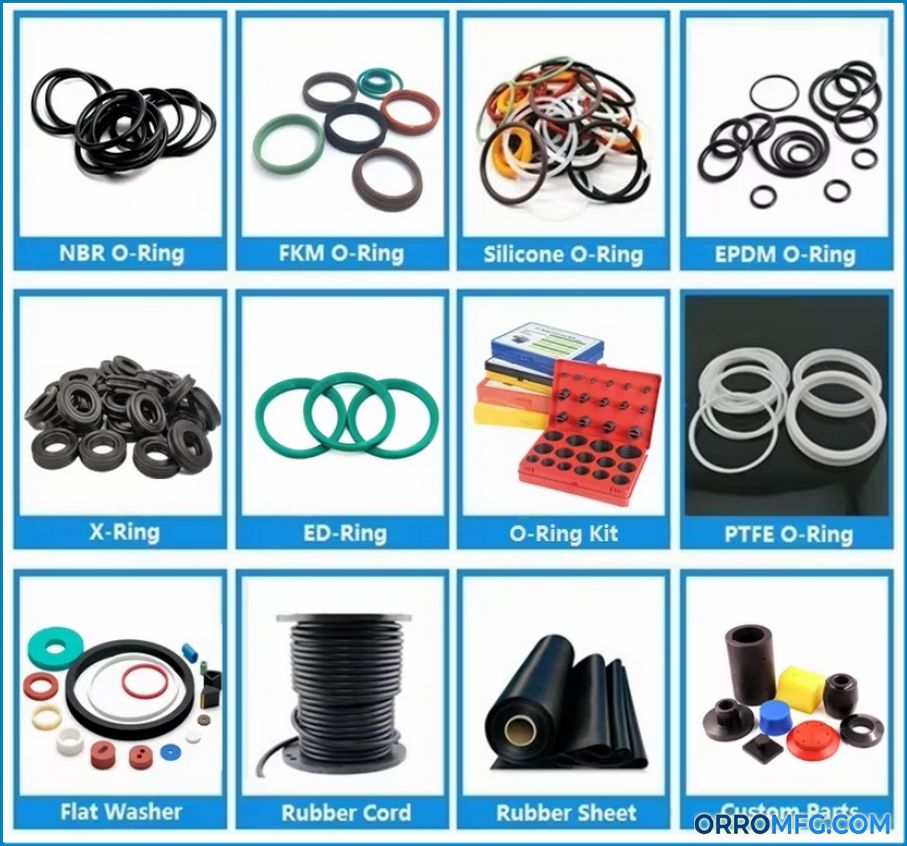
- FKM material guide — compounds, properties and selection notes
- NBR O-Ring — the lower-cost oil seal option
- Silicone O-Ring — cold flexibility and food applications
- EPDM Flat Gasket — water, steam and coolant sealing
- Seals, Gaskets & O-Rings — the full sealing range
Send the size (ID × CS), quantity, media, temperature and hardness for a same-day quote. If you have a groove drawing or an old ring, include it — we will confirm the compound and the size before production.