
Graphite
Custom Graphite Parts We Manufacture
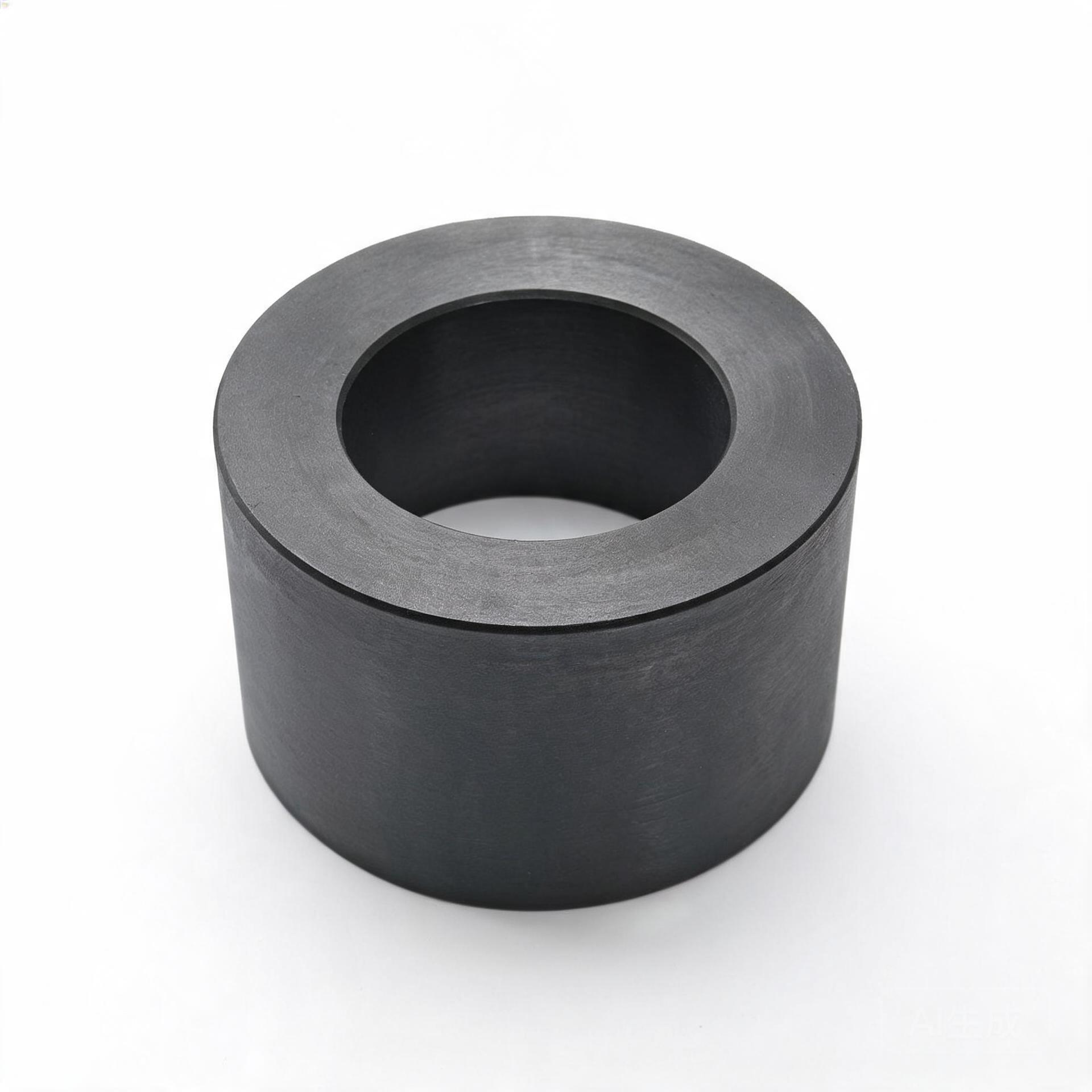
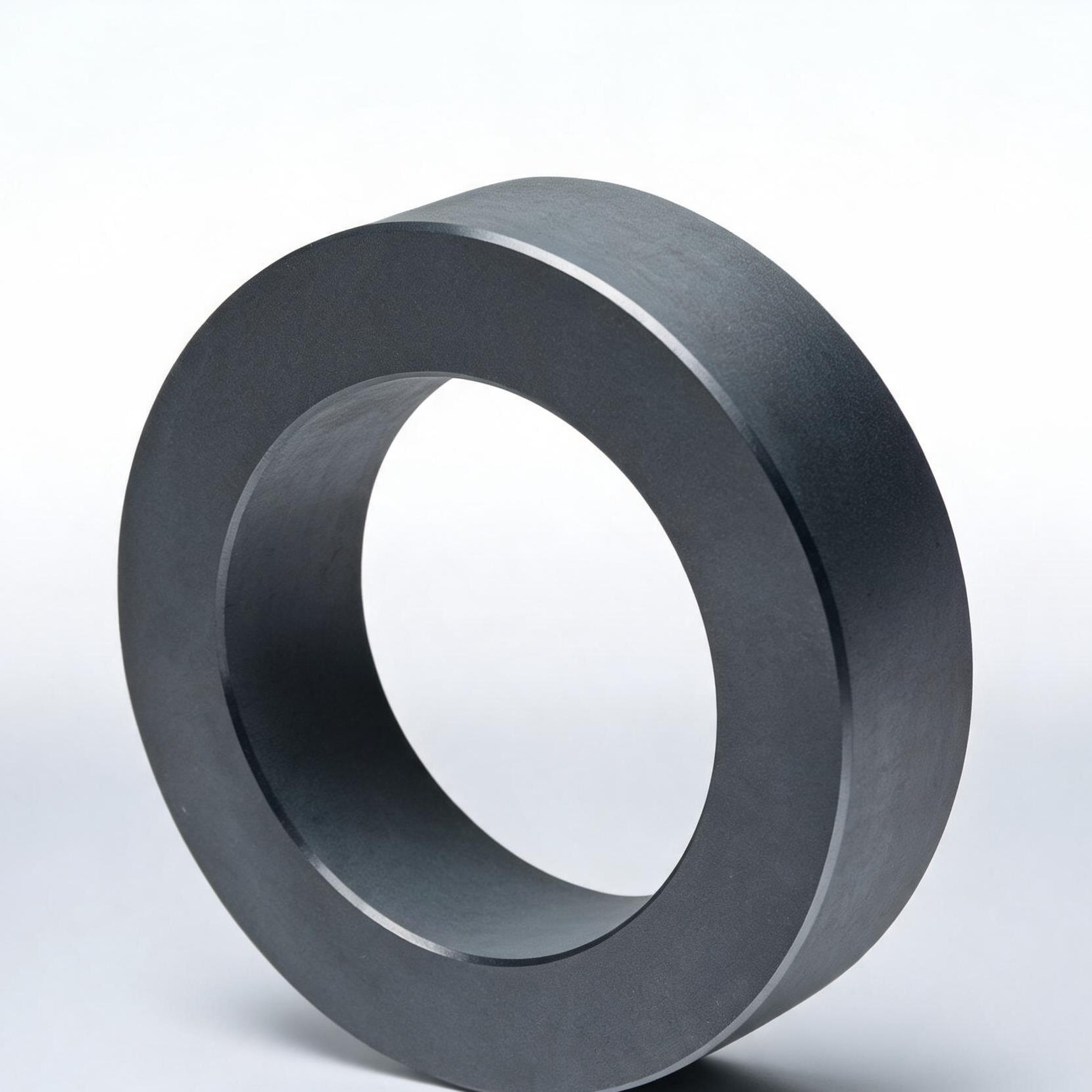
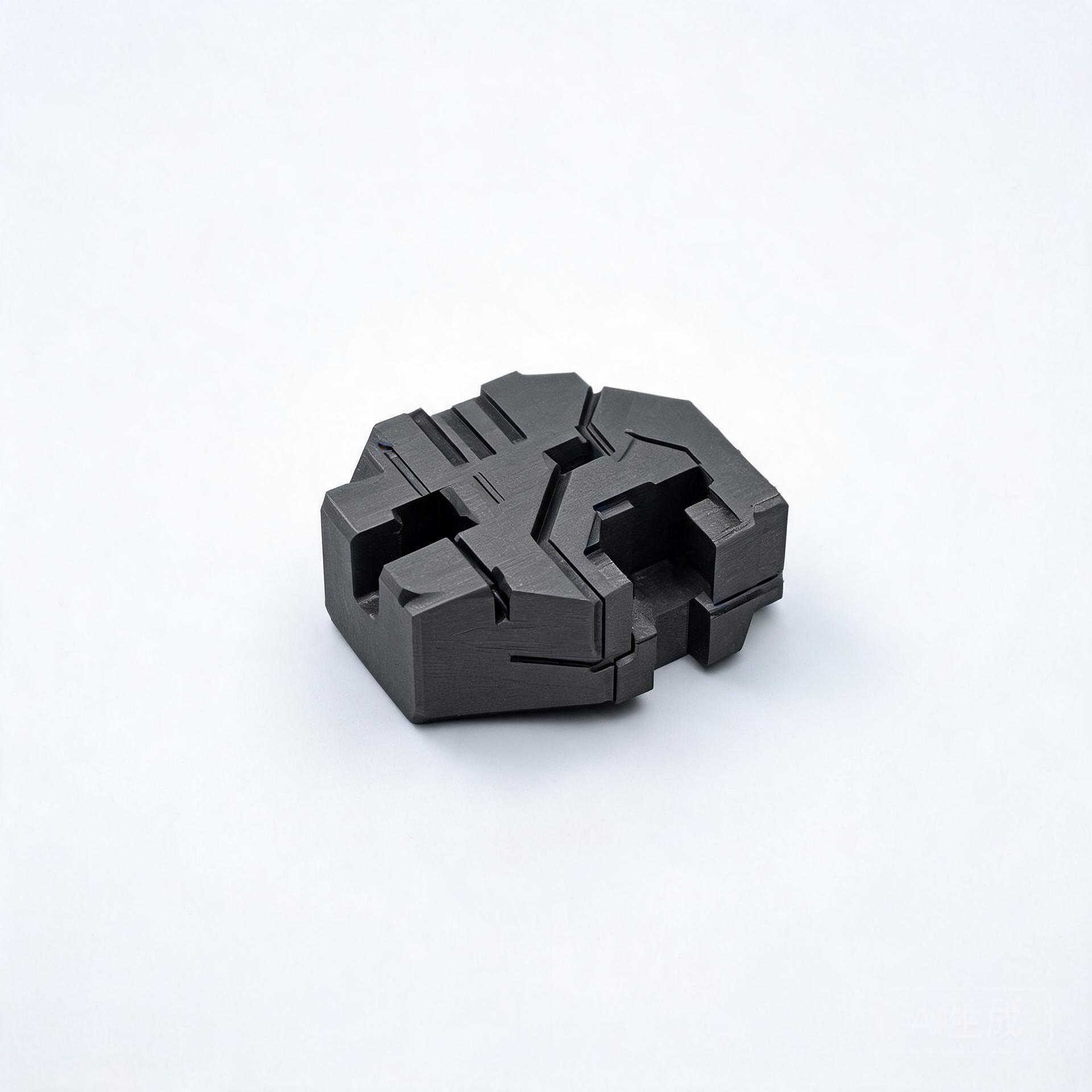
Fine-grain and isostatic graphite is the go-to carbon material when a part must survive furnace heat, run dry without lubrication, or sink electrical discharge (EDM). It is self-lubricating and dimensionally stable to 3000°C in inert atmospheres — but in ordinary air it oxidizes above roughly 450°C and it is brittle, dusty and not for impact loads.
On this page: 1. What it is · 2. Best/worst at · 3. Core properties · 4. Applications · 5. How to choose · 6. Selection questions · 7. Machining notes · 8. Stock forms · 9. Fit / not fit · 10. FAQ
1. What Graphite Is
Graphite is a crystalline form of carbon manufactured by baking and graphitizing carbon filler with pitch binder; engineering stock is pressed into blocks, rods and tubes.
- Common names / aliases: graphite, industrial graphite, isostatic (iso-molded) graphite, extruded graphite, molded graphite, EDM graphite, carbon graphite; Chinese: 石墨 / 等静压石墨.
- Grades by forming: isostatic (fine/ultra-fine grain, homogeneous, for EDM electrodes and precision parts), molded (medium grain, general), extruded (coarser, large electrodes), and impregnated graphites (resin, copper, antimony or babbitt impregnation for mechanical seals/self-lubricating bearings).
- Grain sizes: ultrafine ≤ 1 µm (fine-finish EDM), fine 1–5 µm, medium 5–20 µm.
- Trade names: Tokai/Toyo Tanso, SGL (R/HLM grades), Mersen (Ellor), Ibiden, GrafTech, and Chinese isostatic grades.
2. Best at, Worst at a Glance
- Best at: dry running and high temperature — EDM electrodes, furnace fixtures, crucibles, sintering dies, mechanical seal faces and vanes; self-lubricating; stable under thermal shock.
- Worst at: service in oxidizing air above ~450°C, strong oxidizing chemicals, and impact/tension loading — it is brittle and conducts electricity/dust, which rules it out near exposed electronics unless contained.
3. Core Properties
| Property | Typical value (fine isostatic grades) |
|---|---|
| Max temperature, inert/vacuum | ≈ 3000°C (sublimes, no melting) |
| Max temperature, in air | ≈ 400–450°C continuous (oxidizes from ~450°C) |
| Density | 1.55–1.90 g/cm³ (fine grades 1.75–1.90) |
| Grain size | 1–20 µm (precision grades ≤ 5 µm) |
| Flexural strength | 35–80 MPa |
| Compressive strength | 80–180 MPa |
| Coefficient of friction (dry) | 0.10–0.25 (self-lubricating) |
| Thermal expansion | Very low (~3–5 × 10⁻⁶/°C) |
| Electrical/thermal | Conductive; good thermal conductor |
Typical ranges for commercial grades; properties vary strongly with grain size, density and impregnation — the grade datasheet/batch report governs.
Chemical exceptions: strong oxidizers (concentrated nitric/sulfuric/chromic acids), halogens at elevated temperature, and some molten salts/metals; in oxidizing air it burns away to CO/CO₂.
4. Typical Applications by Industry
- Mold & die (EDM): EDM electrodes for complex cavities in mold steel — ribs, thin walls, carbide; fine-grain grades for mirror/low-wear finishing.
- Semiconductor & solar: susceptors, heaters, insulation shields, wafer boats/process parts (high-purity grades), crucibles for crystal pulling.
- Metallurgy & foundry: continuous-casting dies and molds, crucibles, launders, degassing rotors, sintering boats and furnace fixtures.
- Glass industry: glass-forming molds, guides, bottle-tool parts (no wetting, thermal shock stable).
- Mechanical/sealing: mechanical carbon seal rings and faces, dry-running bearings and bushings (impregnated grades), pump vanes and compressor blades.
- Heat treatment: heating elements, heat shields, setters, furnace tubes in vacuum/inert furnaces.
5. How to Choose: Graphite vs Carbon Graphite vs PTFE
| Factor | Fine-grain graphite | Carbon graphite (amorphous) | PTFE |
|---|---|---|---|
| Temperature | 450°C air / 3000°C inert | ≈ 350–500°C | 260°C |
| Strength/hardness | Higher, denser | Softer, more porous | Soft, creeps |
| Dry sliding | Excellent | Excellent (often impregnated) | Lowest friction, but wears |
| EDM performance | Best (fine grain) | Not used | Cannot |
| Chemical purity | High-purity grades | Medium | Near-universal chemical resistance |
| Cost | Medium–high | Low–medium | High |
Conclusion: choose fine isostatic graphite for EDM, semiconductor and precision heat-process parts. Choose carbon graphite or impregnated graphite for plain dry bearings and seal faces at lower cost. Choose PTFE when chemical resistance, not temperature or EDM conductivity, drives the design. For mechanical seals handling chemically aggressive hot liquids, silicon carbide ceramic often wins over graphite.
6. Five Questions to Answer Before You Specify It
- Atmosphere & temperature? Inert/vacuum/argon → nearly 3000°C; in air → cap at ~450°C and consider coatings or SiC.
- EDM or structural? EDM electrodes need fine/ultra-fine grain and high density; furnace fixtures can use cheaper molded/extruded grades.
- Purity? Semiconductor/solar parts require high-purity (low-ash) grades and clean machining; state ppm limits.
- Wear/impregnation? Dry bearings/seals usually need resin/metal-impregnated graphite to close porosity and raise strength.
- Dust/EHS? Graphite dust is conductive — parts near open electrical/electronics need enclosed handling; plan extraction.
7. Machining and Usage Notes
- Machined dry with dust extraction — no liquid coolant (it contaminates porous structure); use carbide or diamond tooling at high speed.
- Tool marks and edge chipping: use sharp tools, light finishing passes; fine-grain grades hold sharp edges; coarse grades need post-polish for sealing faces.
- Dust is conductive and abrasive to machine ways — seal the machine, vacuum at the cutter, wear a mask.
- Semiconductor parts need post-machining bake-out/degassing and cleanroom packaging.
- Impregnated parts are machined after impregnation; seal faces are lapped to optical-flat bands.
- Design against point loads and sharp tensile corners; graphite is strong in compression, weak in tension/impact.
8. Stock Forms We Keep
- Blocks/plates: isostatic blocks in fine grades (common sizes up to ~500+ mm).
- Rods: dia. 10–300 mm for electrodes and bearings.
- Tubes and shaped blanks for crucibles, dies and heaters.
- Custom: CNC-machined EDM electrodes, furnace tooling, vanes, seal faces; impregnation and lapping arranged on request.
9. Who It Suits, Who It Doesn’t
Suits:
- Mold shops designing EDM electrodes for fine or deep cavities.
- Furnace/semiconductor/glass engineers needing conductive, heat-shock-stable tooling.
- Pump/seal builders requiring dry-running, self-lubricating vanes and faces.
Doesn’t suit:
- Parts running in hot open air above ~450°C without protection.
- Impact, bending or high-tension mechanical loads (use metal/SiC).
- Food/wet-consumer products or assemblies near unprotected electronics (conductive dust).
10. FAQ
What is graphite used for in precision machining?
Two main streams: EDM electrodes (fine-grain isostatic graphite erodes mold steel accurately with low wear) and high-temperature/process tooling — furnace fixtures, crucibles, sintering dies, semiconductor susceptors — plus dry-running seal faces and pump vanes.
What is the difference between graphite and carbon (carbon graphite)?
Both are carbon; graphite is heat-treated to ~3000°C into crystalline graphite (more conductive, denser, self-lubricating, fine-grain grades available). Carbon graphite is baked to lower temperature — harder? generally more porous, softer and cheaper, and is usually impregnated with resin or metal for bearings/seals.
Can graphite parts be used hot in open air?
Only to about 400–450°C; above that graphite oxidizes (slowly burns) and loses section. In vacuum or inert gas it serves to ~3000°C. For hot-air service use coatings/oxidation inhibitors or switch to silicon carbide.
Why is graphite self-lubricating?
Its crystal structure consists of weakly bonded layers that slide over one another, leaving a lubricating film on the mating surface — so graphite bearings and vanes run dry without oil, which is why they survive where grease would carbonize.
Does graphite conduct electricity and heat?
Yes — both. Electrical conductivity makes it the standard EDM electrode and heater material; thermal conductivity plus very low thermal expansion makes it resist thermal shock in furnaces. Treat any graphite dust as conductive around electrical equipment.
Which EDM graphite grade should I choose?
Match grain to the job: ultrafine/fine grades (≤ 1–5 µm) for finishing, ribs and fine detail with low wear; coarser grades for roughing large cavities where removal rate and cost dominate. Send the cavity drawing and steel type and we’ll recommend the grade and electrode count.
Send the atmosphere, temperature and grade requirements — we’ll machine from the right graphite. Request a Quote