
Ceramics
Custom Ceramics Parts We Manufacture
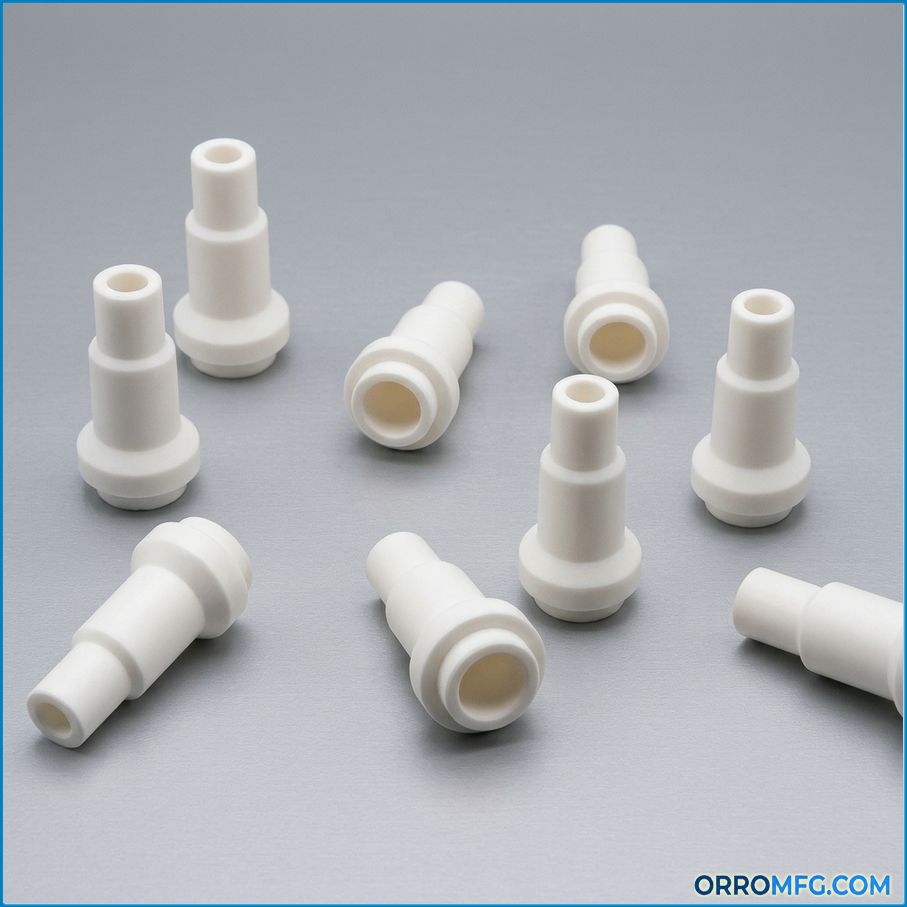
Flanged Ceramic Nozzle Inserts
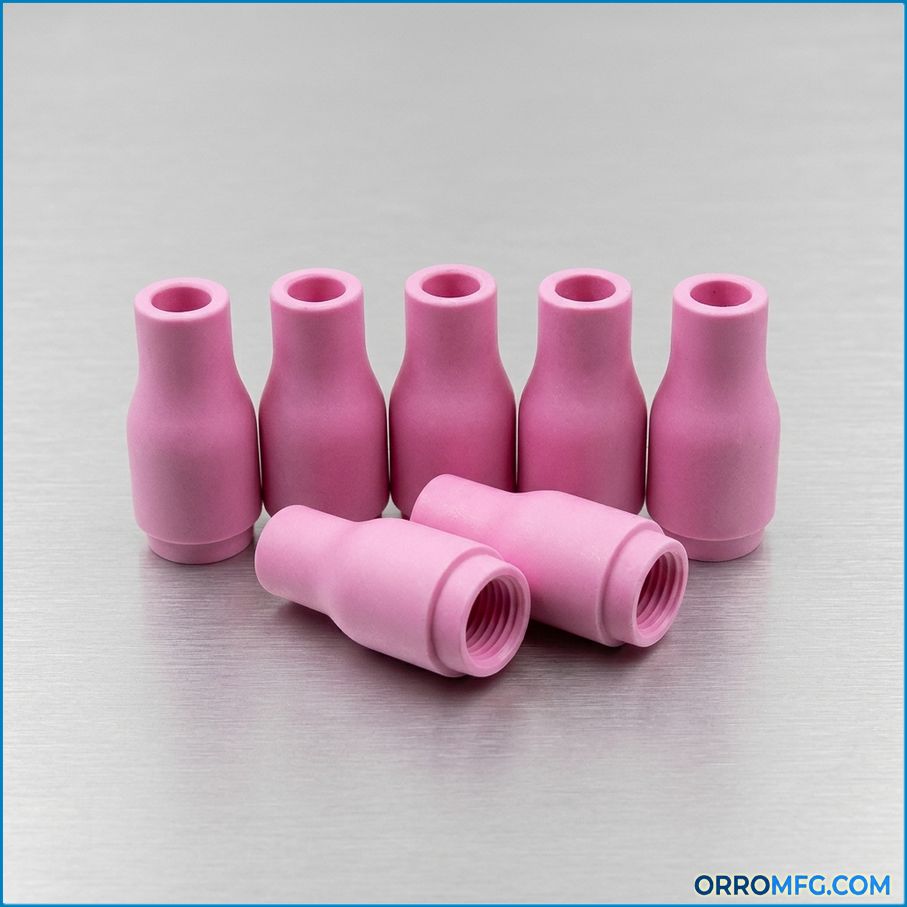
TIG Welding Ceramic Cups
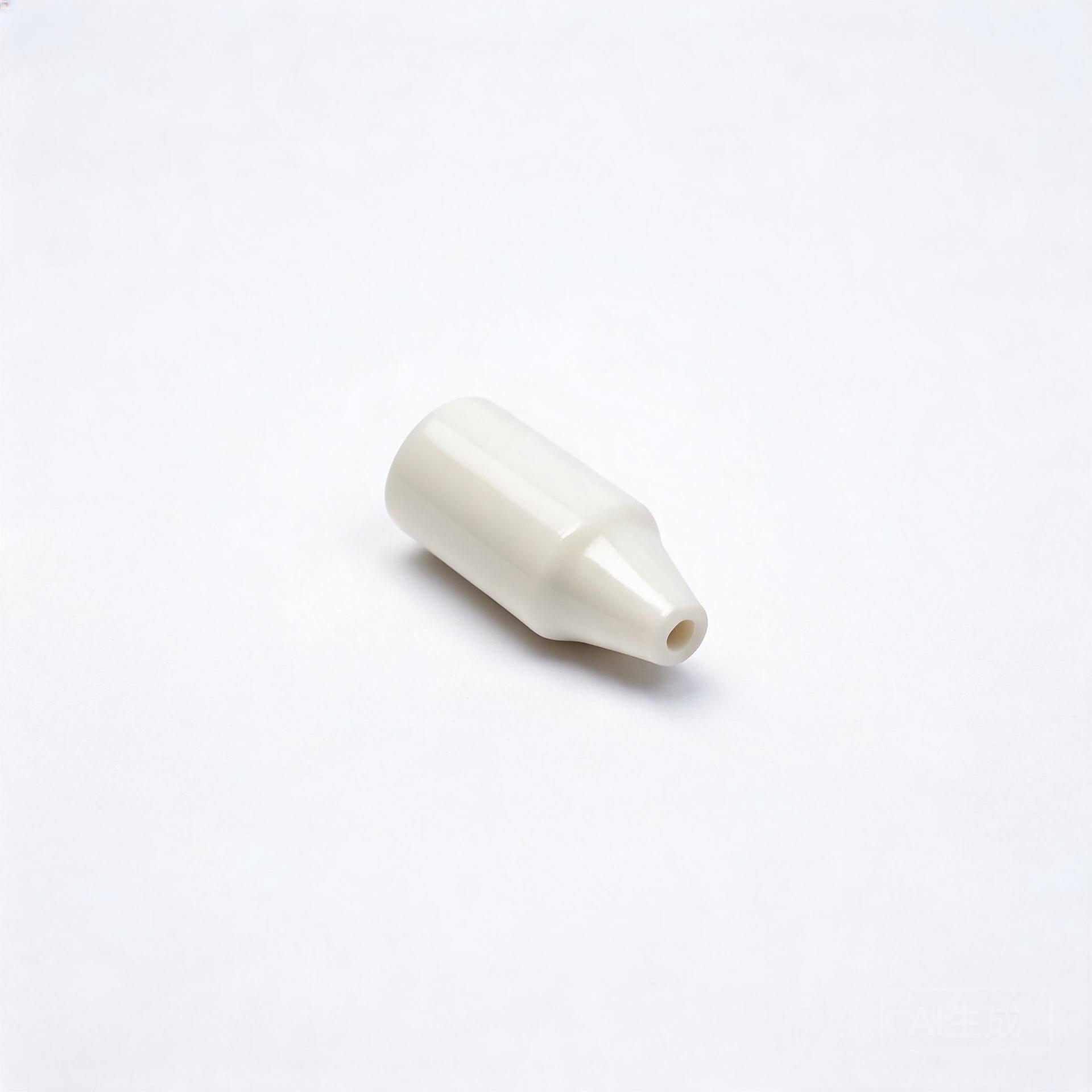
Ceramic Nozzles
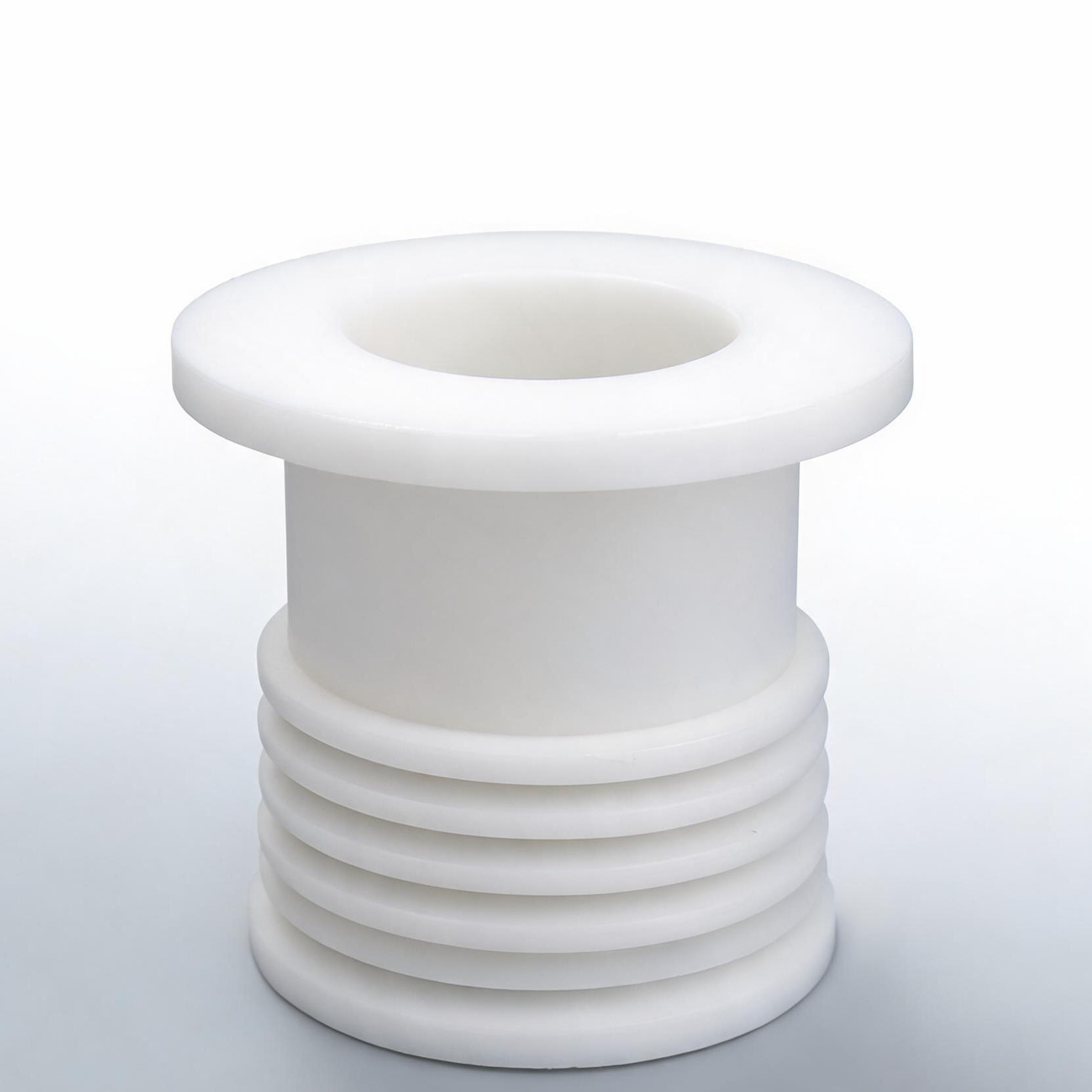
Alumina Insulator
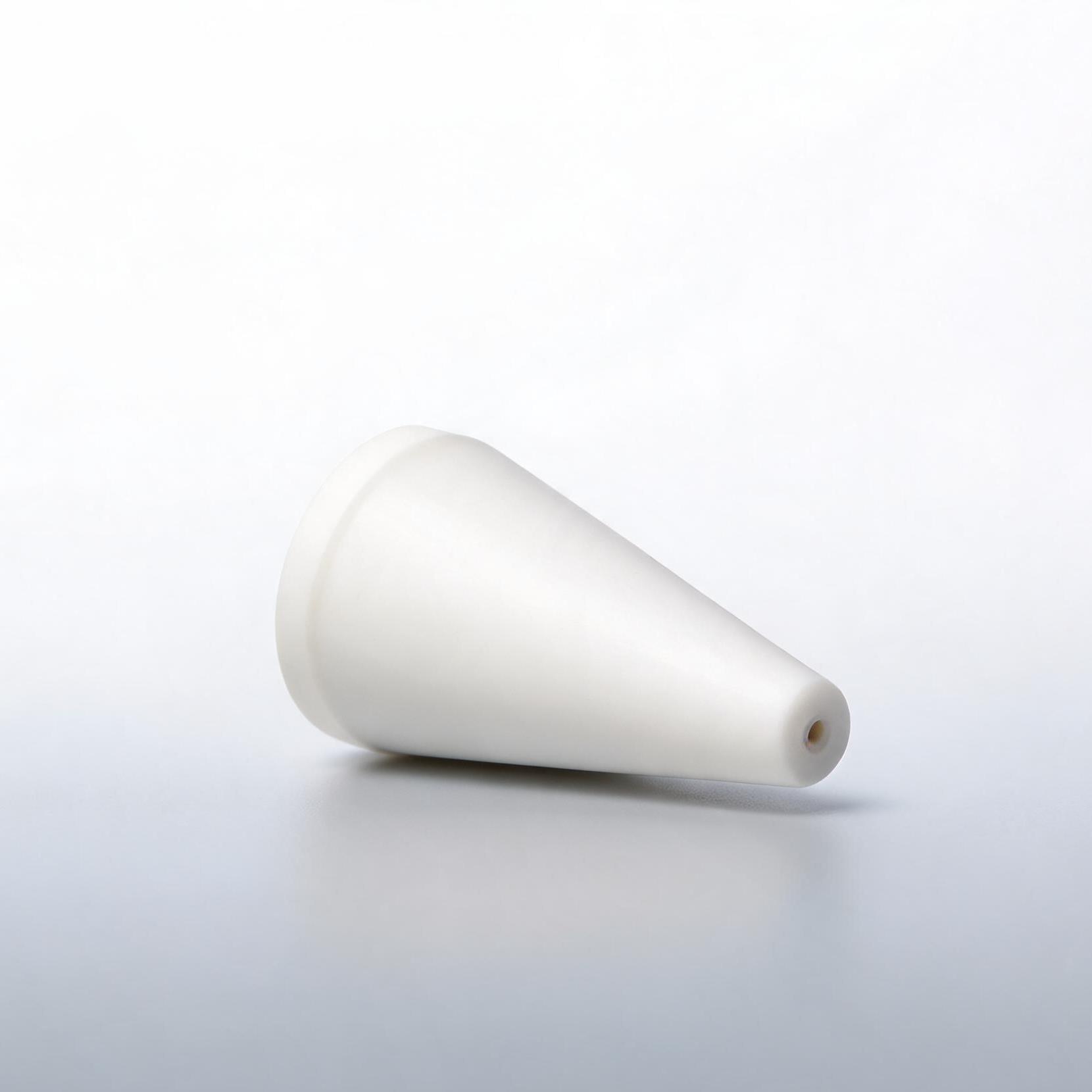
Zirconia Ceramic Nozzles
Advanced engineering ceramics — alumina, zirconia, silicon carbide and silicon nitride — deliver hardness, wear resistance, electrical insulation and temperature capability no plastic or most metals can match: seal faces, nozzles, wire guides, insulators and medical blades. The trade-offs are brittleness (no impact/plastic deformation), diamond-grinding manufacturing, longer lead times and higher cost.
On this page: 1. What it is · 2. Best/worst at · 3. Core properties · 4. Applications · 5. How to choose · 6. Selection questions · 7. Machining notes · 8. Stock forms · 9. Fit / not fit · 10. FAQ
1. What Technical Ceramics Are
Engineering/advanced ceramics are dense, sintered inorganic parts made from high-purity oxide or non-oxide powders — a different category from whiteware/porcelain.
- Alumina (Al₂O₃): aluminum oxide, 95–99.9% purity; the general-purpose electrical-insulation and wear ceramic. Chinese: 氧化铝陶瓷.
- Zirconia (ZrO₂): zirconium dioxide, usually Y-TZP (yttria-stabilized); toughest common ceramic, used for blades and high-strength parts. Chinese: 氧化锆陶瓷.
- Silicon carbide (SiC): carborundum; extremely hard, thermally conductive and thermal-shock resistant — seal faces and nozzles. Chinese: 碳化硅陶瓷.
- Silicon nitride (Si₃N₄): highest toughness/thermal-shock grade — bearings, cutting tools, engine parts. Chinese: 氮化硅陶瓷.
- Machinable glass-ceramic: e.g., Macor-type mica ceramic, machinable with ordinary tools to ~800°C (low-strength, for prototypes/insulators).
- Trade names/suppliers: CoorsTek, Kyocera, CeramTec, Morgan Advanced Materials, Saint-Gobain, 3M, plus Chinese sintered stock.
Alumina Purity Grades and What They Change
| Purity | Density | Flexural strength | What it buys | Typical use |
|---|---|---|---|---|
| 95% | ~3.6 g/cm³ | 250–300 MPa | Lower cost, adequate wear and insulation | General wear plates, nozzles, insulators |
| 99% | ~3.85 g/cm³ | 300–400 MPa | Better wear resistance and dielectric strength | Seal faces, wire guides, high-voltage insulators |
| 99.5% | ~3.9 g/cm³ | 350–400 MPa | Low glassy phase, better corrosion and surface finish | Semiconductor, chemical, lapped faces |
| 99.9% | ~3.95 g/cm³ | 350–400 MPa | Highest purity, best plasma and chemical resistance | Chamber parts, optical and analytical parts |
The step from 95% to 99.5% is not about density — it is about how much silica and alkali glass remains between the grains. That grain-boundary phase is what corrodes in hot acid and what wears first in an abrasive slurry, which is why a “cheap” 95% nozzle can fail a qualification that 99.5% passes.
For zirconia, the standard machining grade is 3Y-TZP (3 mol% yttria); hydrothermal-ageing-resistant variants are specified where the part sees steam or body-temperature moisture for years.
2. Best at, Worst at a Glance
- Best at: extreme hardness/wear (HV 1200–2800), electrical insulation, corrosion and 1000–1600°C heat, surface finish and dimensional permanence.
- Worst at: impact, point loads and sudden tensile stress — ceramics crack instead of bending; parts require diamond grinding and carry longer lead time and cost.
3. Core Properties
| Property | Alumina 99% | Zirconia Y-TZP | Silicon carbide |
|---|---|---|---|
| Max use temperature | 1500–1700°C | 800–1000°C* | 1400–1600°C |
| Density | 3.6–3.95 g/cm³ | 5.9–6.1 g/cm³ | 3.1–3.2 g/cm³ |
| Vickers hardness | HV 1400–1800 | HV 1200–1400 | HV 2200–2800 |
| Flexural strength | 250–400 MPa | 900–1300 MPa | 350–500 MPa |
| Fracture toughness KIC | 3–4.5 MPa·m½ | 4.5–5.5 (highest oxide) | 3–4 |
| Thermal conductivity | 25–35 W/m·K | 2–3 W/m·K | 120–180 W/m·K |
| Electrical insulation | Excellent | Excellent | Semi-conductive (grade-dependent) |
| Water absorption | 0% (fully dense) | 0% | 0% |
* Zirconia’s long-term strength above ~200–300°C in steam/moisture can be affected by hydrothermal aging (low-temperature degradation); design accordingly. Typical ranges for commercial sintered grades — treat as indicative; the grade datasheet and lot report govern.
4. Typical Applications by Industry
- Mechanical sealing & pumps: mechanical seal faces and seats (SiC/SiC and SiC/carbon pairs), ceramic shaft sleeves, bushings, valve seats and balls for corrosive/abrasive fluids.
- Wire & textile: wire-guide dies and pulleys, thread guides, texturing discs, welding contact tips, nozzles for sandblast/waterjet/plasma/welding.
- Electrical/electronics: high-voltage insulators, feedthroughs, spark-plug bodies, resistor cores, laser components, insulating washers and spacers.
- Medical & laboratory: zirconia scalpel/industrial blades, surgical tool components, plungers, check-valve balls, crucibles and analytical parts.
- Furnace & high-temperature: setter plates, tubes, thermocouple sheaths, burner nozzles, kiln furniture.
- Semiconductor: ceramic end effectors, insulators, electrostatic-chuck components (alumina/AlN).
5. How to Choose: Alumina vs Zirconia vs Silicon Carbide
| Need | Best choice | Why |
|---|---|---|
| General electrical insulation, best value | Alumina 95–99% | Mature, cheap stock, easy to source |
| Highest strength/toughness, sharp edge, blades | Zirconia | Flexural ~1000+ MPa, toughest oxide |
| Hardest wear surface + heat removal | Silicon carbide | HV ~2500, high thermal conductivity |
| Thermal shock / hot moving parts | Silicon nitride | Highest KIC and shock resistance |
| One-off prototype on standard tooling | Machinable glass-ceramic | No sintering/grinding needed, to ~800°C |
Conclusion: default to alumina for insulation and general wear; move to zirconia where impact/edge strength dominates (blades, plungers, fine features); choose SiC for the hardest seal faces and nozzles with thermal cycling; reserve Si₃N₄ for the toughest thermal-shock bearings. Don’t specify ceramic where a metal or PEEK part could take the impact.
6. Five Questions to Answer Before You Specify It
- Temperature + atmosphere? Up to 1000–1600°C is normal for ceramics; check zirconia’s hydrothermal-aging limit in steam; SiC oxidation behavior in air.
- Contact medium? Most acids/alkalis fine; note hydrofluoric acid attacks silica-bearing ceramics strongly; molten salts/metals grade-dependent.
- Wear/load mode? Abrasion/erosion → SiC/alumina; edge impact/knife loads → zirconia; shock/impacts → Si₃N₄ or rethink (metal/PU).
- Tolerance & finish? Sintered shrinkage (~15–25%) means tight features need diamond grinding; state whether as-sintered ±0.5% or ground ±0.005–0.01 mm.
- Electrical requirement? Alumina/zirconia insulate; SiC can be conductive/resistive — don’t assume insulation across all ceramics.
7. Machining and Usage Notes
- Process sequence: machined in the green/bisque state, sintered (large shrinkage), then diamond ground/lapped to final size; direct grinding of sintered stock is routine for simple parts.
- Internal threads and tiny holes are made before sintering or via costly grinding/EDM (on conductive grades) — design generous radii and avoid sharp internal corners.
- Brittle fracture design: distribute loads over area, use compliant gaskets/metal backing, avoid press fits and point contacts; polish high-stress surfaces.
- Parts can be made to mirror finish (Ra ≤ 0.1 µm) for seal faces; specify flatness bands for lapped faces.
- Lead times are longer than plastics (tooling/grinding), and minimum-order/tooling costs apply to custom green machining.
8. Stock Forms We Keep
- Sintered rods and tubes: alumina/zirconia standard diameters for grinding.
- Plates/blocks: alumina and machinable glass-ceramic sheet.
- Balls/seal rings: standard sizes in alumina/zirconia/SiC.
- Custom: green-machined and sintered-to-print parts with diamond finish; 95/99/99.5% alumina purity selectable.
9. Who It Suits, Who It Doesn’t
Suits:
- Seal/nozzle/guide makers fighting abrasion and corrosion beyond metal limits.
- Electrical/high-voltage engineers needing permanent, heat-proof insulation.
- Medical/textile/wire industries needing razor edges or ultra-smooth guides.
Doesn’t suit:
- Shock/impact or crash-loaded components (choose steel/PU/zirconia-only-cases).
- Rapid low-cost prototypes (choose plastic/macor first).
- Designs relying on press fits, threads under load or field modification.
10. FAQ
What is the difference between alumina and zirconia ceramic?
Alumina (Al₂O₃) is the economical, insulating general-purpose wear ceramic; zirconia is the strongest and toughest oxide ceramic, with a fine sharp edge — chosen for blades, plungers and high-load precision parts at a higher price and lower temperature limit.
Are ceramic parts fragile? Will they break?
Sintered ceramics are extremely hard and strong in compression, but brittle under impact or point loads — they do not bend before breaking. Proper design (area loading, radii, compliant mounts) makes ceramic seal faces and bearings last years; dropping a thin ceramic part onto concrete will chip it.
Can ceramic take thermal shock?
Alumina tolerates moderate shock; silicon carbide and silicon nitride excel at rapid heating/cooling thanks to high conductivity/toughness (e.g., SiC seal faces in hot-cold cycling). Thin sections and even heating also help.
Ceramic vs tungsten carbide for wear parts?
Both wear extremely well. Tungsten carbide is tougher and conducts electricity (EDM-able) but heavy (~15 g/cm³) and can corrode; silicon-carbide ceramic is ~5× lighter, harder in abrasion, chemically inert and thermally stable — the modern seal-face choice in corrosive pumps.
Can ceramic parts be CNC machined?
Not like metal: fully sintered ceramic is ground with diamond wheels; complex shapes are machined soft (“green”) and then sintered with predictable shrinkage. For low-temperature prototypes there is machinable mica glass-ceramic that ordinary carbide tools can cut. Send the print early so we can set the process route.
How hot can ceramic parts go?
Alumina to ~1500–1700°C, silicon carbide ~1400–1600°C, silicon nitride ~1200°C, and zirconia mechanically ~800–1000°C (mind hydrothermal aging in steam). These are material limits; real ratings also depend on mounting and thermal gradients.
Send the print, service temperature and media — we’ll recommend alumina, zirconia or SiC. Request a Quote