Overview
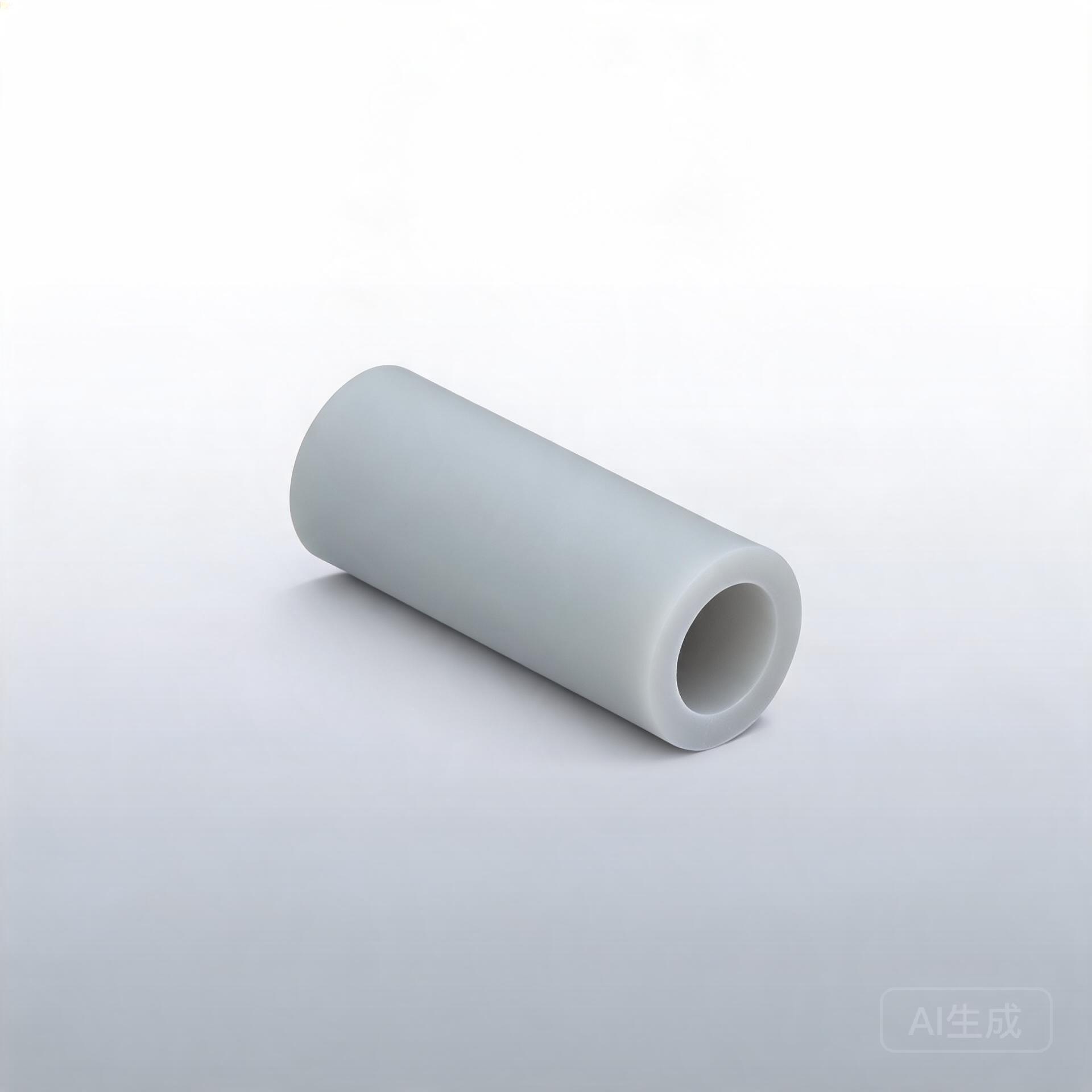
A PVC vinyl end cap is a soft, push-on cover that slips over the end of a bolt, stud, threaded rod, pipe or bar and stays there. It keeps dust and swarf out, keeps rust and handling damage off, and insulates the end electrically. It is the cheapest way to protect a thread or a machined end between the factory and the assembly line — far cheaper than a metal cap, and unlike tape it comes off in one movement and can go back on.
ORRO supplies these caps in flexible (plasticized) PVC, made by dip molding and injection molding. Flexible vinyl is the right material here for a specific reason: it stretches over a thread or a chamfer without cracking, grips by elastic recovery rather than by a latch, and costs a fraction of silicone or EPDM per piece. It is not a high-temperature part — it is a general-purpose protection and insulation part, and that is exactly where its cost advantage matters at volume.
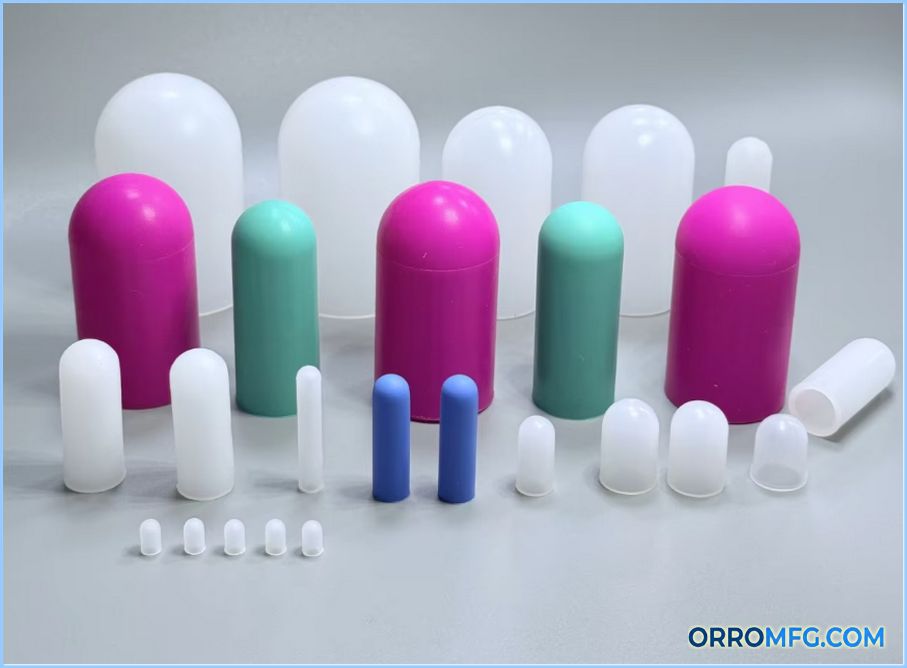
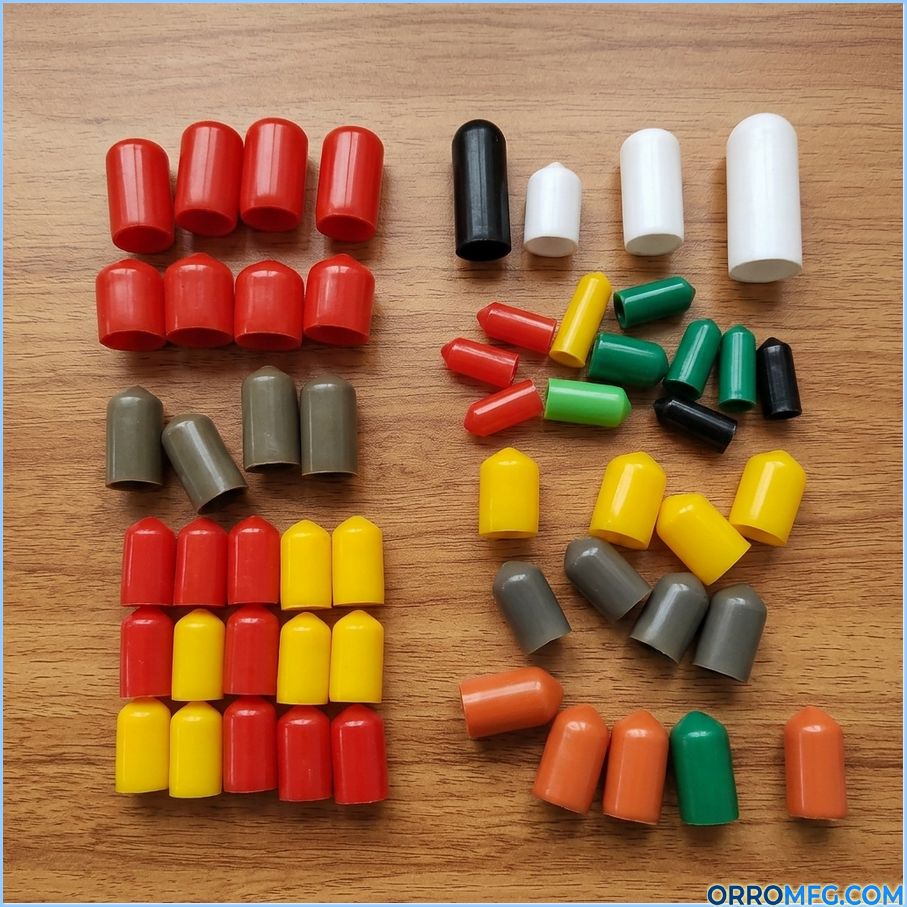
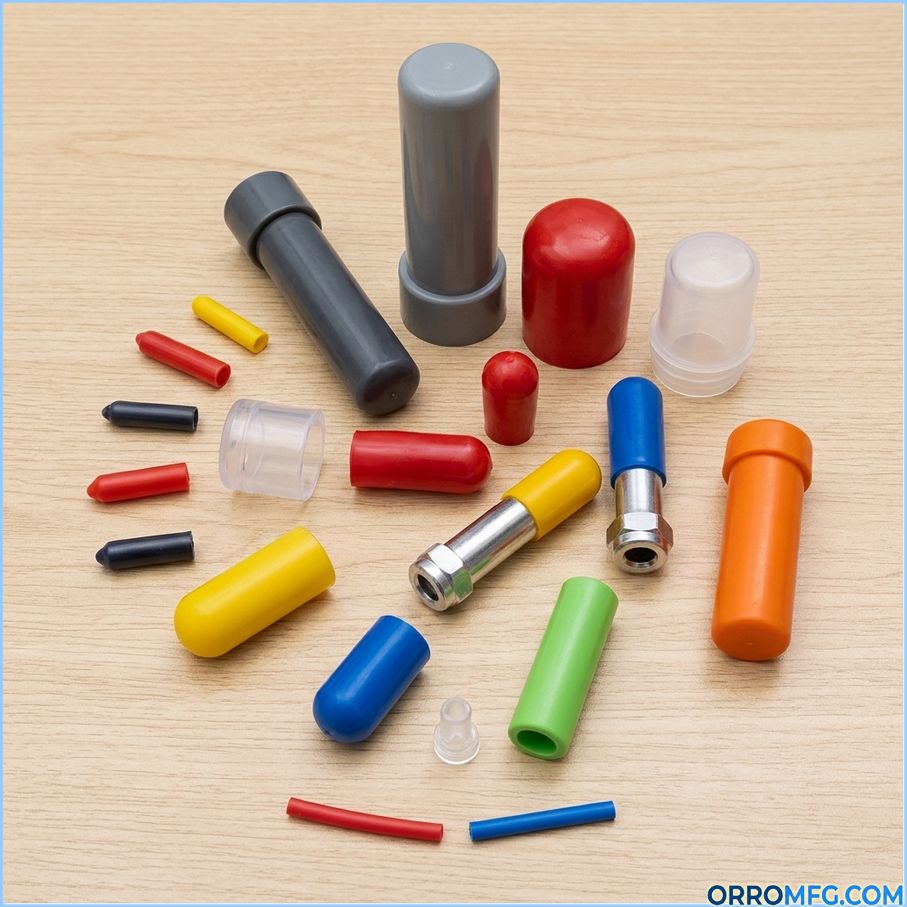
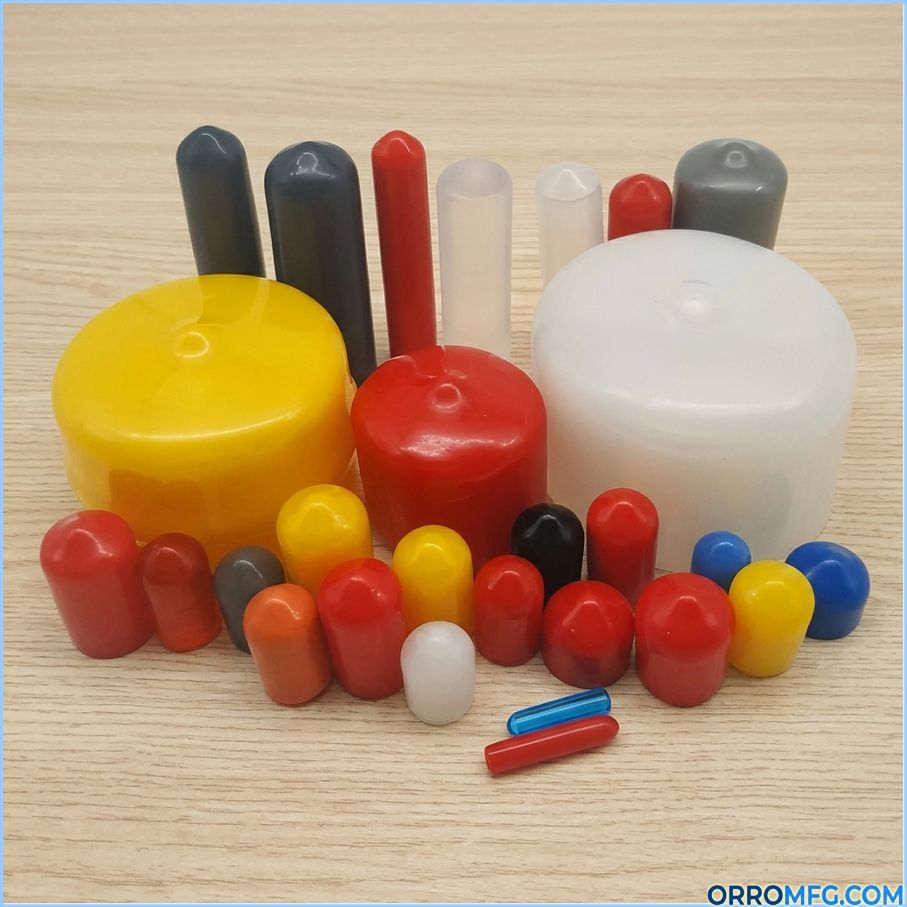
Caps are available in black, white, red, yellow, green, blue, orange, grey and clear, with custom colour matching. Sizes run from a few millimetres for M3 screws to over 100 mm for pipe and bar ends, in round, square and rectangular profiles, plus tapered pull-plug styles for masking holes and threads during coating.
Key Features
- Flexible and elastic — the cap stretches over a thread crest, a chamfer or a weld spatter and springs back to grip, so it does not need a latch or an adhesive.
- Tight, rattle-free fit — elastic recovery keeps the cap on a vibrating line, in a shipping carton and on a rotating assembly.
- Dust, water and rust protection — seals the end against grit, coolant, humidity and handling damage during storage and transit.
- Electrical insulation — flexible PVC is a good dielectric, so the cap doubles as a terminal, busbar or cable-end insulator.
- Chemical resistance — resistant to water, dilute acids and alkalis, salts and alcohols; suitable for plating lines, washdown and outdoor hardware.
- Wide colour range, low cost — colour coding prevents wrong-part fitting, and the material cost per piece is a fraction of silicone or EPDM.
- Reusable — pulls off without tearing and can be refitted, unlike single-use tape or paper masking.
- Simple to install — no tools, no heat, no adhesive: measure, select, push on.
Material Specifications
Typical values for flexible (plasticized) PVC vinyl caps. The grade datasheet governs the final design.
| Property | Typical value |
|---|---|
| Service temperature | −20 °C to +60 °C (short peaks to about +70 °C) |
| Hardness | 60–80 Shore A (soft grades for large caps) |
| Density | 1.25–1.45 g/cm³ |
| Tensile strength | 10–20 MPa |
| Elongation at break | 200–350 % |
| Dielectric strength | 15–25 kV/mm |
| Volume resistivity | 10¹¹–10¹³ Ω·cm |
| Water absorption | Low |
| Acid / alkali resistance | Good (dilute) |
| Solvent and oil resistance | Poor — plasticizer is extracted by fuels and some solvents |
| UV / weathering | Fair; black is the most stable colour outdoors |
| Standard colours | Black, white, grey, red, yellow, green, blue, orange, clear; custom matched |
Grades: general-purpose flexible PVC for standard protection; flame-retardant PVC (UL94 V-0) for electrical and enclosure use; clear vinyl where the covered part must stay visible; rigid PVC for caps that need to hold shape rather than grip.
Sizes and Styles
Caps are specified by the outside diameter of the part they cover, not by thread size — a vinyl cap grips on the OD, so an M10 stud needs a cap that fits the 10 mm shank, and if the thread is rolled or has a burr, choose the next size with a longer body.
| Style | Typical use |
|---|---|
| Round cap | Bolt heads, stud ends, bar and rod ends — the standard shape |
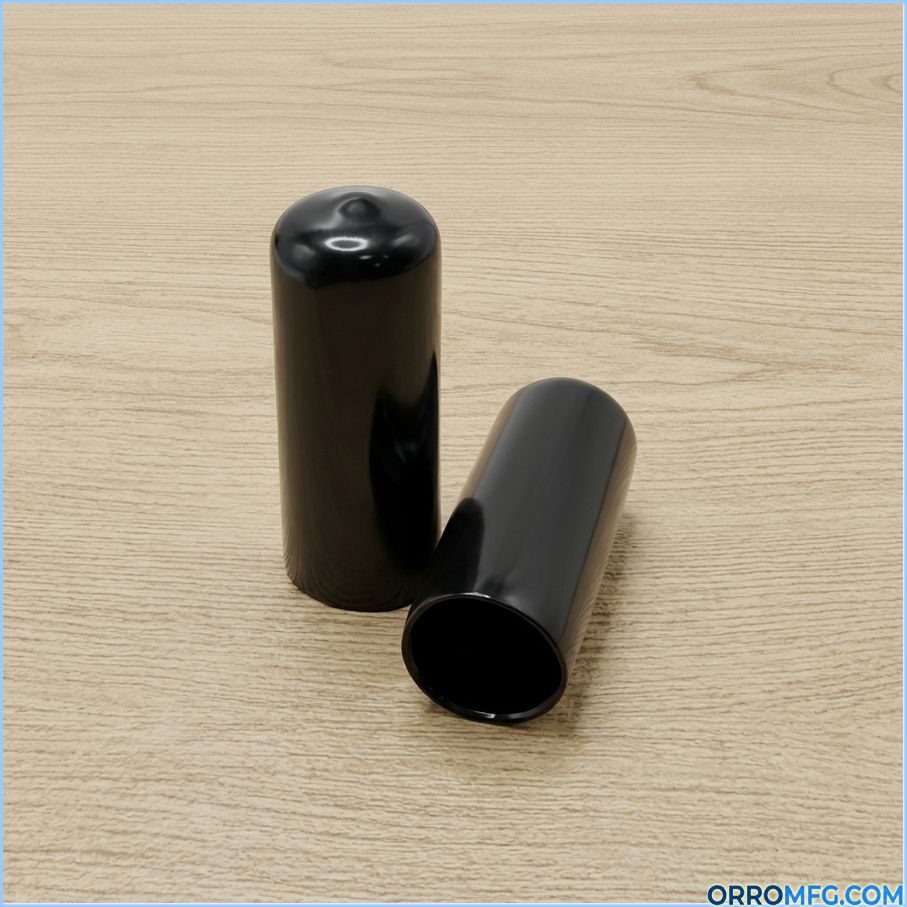
| Long round cap | Threaded rod, long studs, tube ends |
| Square / rectangular cap | Square tube, box section, busbar ends |
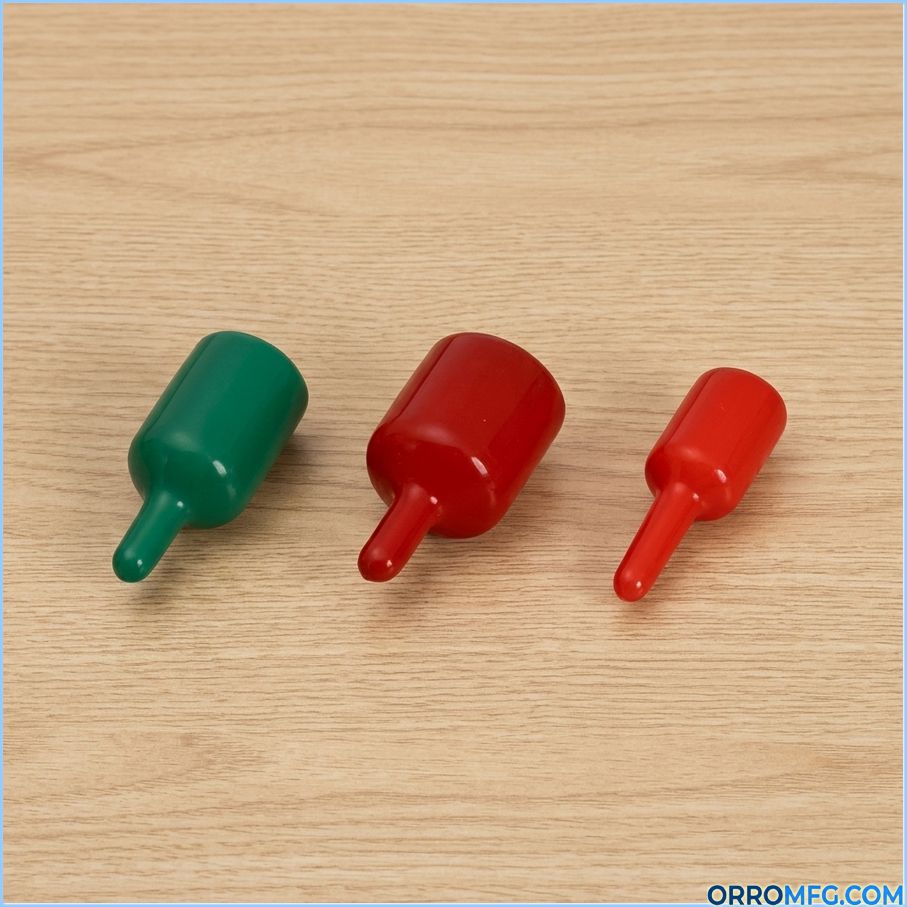
| Tapered pull plug | Masking holes, bores and threads during painting or coating |
| Teardrop / pull-tab cap | Fast removal after plating, coating or transit |
| Clear cap | Parts that must stay visible or inspectable |
| Large-diameter cap | Pipe, drum, container and bar ends |
Size range: inner diameter from about 3 mm to over 100 mm; body length from 10 mm to 150 mm. Non-standard diameters and lengths are made to drawing or sample, subject to tooling.
How to Install
- Measure the outside diameter of the bolt, stud, pipe or rod end.
- Select the cap whose inner diameter matches that OD — the same size, or one size down for a tighter grip.
- Align the open end of the cap square to the part.
- Push on until the cap seats fully against the shoulder; for long caps, push progressively rather than forcing one edge.
- Check the cap is seated square, then release to the line. For removal, peel the rim back and pull.
Applications
- Thread and bolt protection — masking threads during painting, powder coating and plating; protecting studs in transit and storage.
- Pipe, tube and rod ends — capping cut ends on site, keeping swarf and moisture out of hydraulic, pneumatic and conduit lines.
- Electrical insulation — covering terminal ends, busbar ends, cable lugs and connector pins; flame-retardant grades for enclosures.
- Industrial equipment — protecting machined shafts, dowel pins, fittings and sensor ends during assembly and shipping.
- Construction hardware — protecting threaded rod, anchors, rebar couplers and handrail tube.
- Furniture and appliances — leg ends, tube plugs, and caps that stop scratching and sharp edges.
Material Comparison
| Property | Flexible PVC | Silicone | EPDM | Polyethylene |
|---|---|---|---|---|
| Max continuous temperature | +60 °C | +200 °C | +130 °C | +80 °C |
| Flexibility at fit | Excellent | Excellent | Good | Fair |
| Grip on thread | Excellent | Excellent | Good | Fair |
| Electrical insulation | Good | Excellent | Good | Excellent |
| UV / weathering | Fair | Excellent | Excellent | Good |
| Oil and fuel resistance | Poor | Poor | Poor | Good |
| Relative cost per piece | Lowest | High | Medium | Low |
| Best for | General protection, insulation | Paint ovens, masking | Outdoor, washdown | Rigid plugs, low cost |
Choose vinyl when the part stays below 60 °C and cost per piece matters — that covers most thread, pipe and terminal protection. Move to EPDM for outdoor and washdown service, and to silicone where the cap goes through a cure oven or must release from cured paint.
Customization Options
- Material: general-purpose flexible PVC, flame-retardant PVC (UL94 V-0), clear vinyl, rigid PVC.
- Colour: black, white, grey, red, yellow, green, blue, orange, clear, and custom colour matching to a RAL or Pantone reference.
- Size: inner diameter 3–100 mm, body length 10–150 mm; non-standard sizes made to drawing or sample.
- Shape: round, square, rectangular, tapered pull plug, teardrop, long-body, with ribs or a stepped bore for multi-diameter parts.
- Marking: LOGO printing or molding on the cap face, at the minimum order quantity for the shape.
- Packaging: PE bags plus carton; custom packaging and labelling available.
- Volume: standard shapes from 100 pieces; custom sizes and colours require simple dip-molding or injection tooling, which we quote with the part.
Quality Control
ORRO manufactures under an ISO 9001 quality management system. Incoming PVC compound is checked against the mill certificate for hardness, density and plasticizer content — plasticizer level is what decides whether a cap grips or splits. Molded caps are inspected for wall thickness, inner diameter, length, seating and colour consistency; electrical grades are sampled for dielectric strength and flame rating. Finished caps are checked for fit on a gauge that matches the mating thread or tube, and supplied with a material certificate and batch traceability.
Frequently Asked Questions
Are you a factory or a trading company?
We are a manufacturer. Our factory is in Shandong, China, and we mold and machine rubber and plastic parts in-house — the caps and the tooling both come from the same plant, which is why size changes are quick.
What is the maximum temperature for these caps?
About +60 °C continuous, with short peaks to roughly +70 °C. Flexible PVC softens and starts to deform above that, and plasticizer migration accelerates. If your process runs hotter — paint cure ovens, engine bays, hot water — use silicone or EPDM instead.
Do you provide free samples?
Yes. Samples of standard sizes are free; the customer pays the courier only. For a custom size or colour, we make the sample after the tooling is confirmed.
What is the lead time?
7–15 days for standard sizes, and 15–20 days for new tooling or custom colours, depending on quantity. We confirm the date against the actual order rather than quoting a generic figure.
What are your payment terms?
For orders up to USD 1,000, 100 % in advance. For orders above USD 1,000, 30 % T/T deposit with the balance before shipment.
How do I pick the right cap size for a thread?
Measure the outside diameter of the stud or thread, then choose the cap that matches it. A cap the same nominal size as an M10 stud (10 mm OD) fits snugly; one size down gives a harder, tighter fit for transport, one size up is easier to fit on site. For rolled or damaged threads, take the next size up and a longer body.
Will the cap crack outdoors?
Flexible PVC is only fair on UV. In direct sun for years, plasticizer migrates and the cap embrittles — black is the most stable colour. For long outdoor exposure use EPDM or silicone, which are both UV-stable.
Can the caps be reused?
Yes. They peel off without tearing and can be refitted several times, which is where vinyl beats tape or paper masking in a production line.
Related Products
- High-Temp Silicone Bolt & Stud Caps — for paint ovens and hot processes
- PVC Insulating Sleeve — insulating sleeves, bushings and flame-retardant grades
- PVC material guide — rigid vs flexible, CPVC and selection advice
- Seals & Gaskets — general sealing components
- Insulating Parts — electrical insulation components
Send your stud, thread or pipe dimensions for a same-day quote. Tell us the quantity, the colour and where the part is used, and our engineering team will confirm size, compound and lead time.